Planning an autumn conference: start your AV planning now
Autumn is traditionally the busiest season for conferences. From September onwards, calendars are packed with professional gatherings, member days, symposia, and international conferences. Everyone wants the same weeks, the same venues, and the same technicians. If you're planning a conference in autumn, it's wise to book your technical equipment and staff in the summer, well before the peak season begins.
Starting early offers more than just certainty about availability. It provides space to thoroughly inspect the venue, technically review the program, and discuss various scenarios. You'll notice that difference on the day itself: a conference where the technical aspects have been thought through in advance runs noticeably smoother than one where things are shifted at the last minute.
Organizing an autumn conference: why summer is the right time
The summer months are quieter, whereas autumn demands everything at once. Quality equipment and experienced technicians are quickly fully booked in September and October. Those who wait until after summer will no longer be choosing what best suits their program, but rather what is still available.
Booking early also means there's time for the things that make a difference. A site visit, a technical run-through, coordination with speakers about their presentations. These steps take little time if you can schedule them calmly, but they become a source of stress if they have to happen in the final week. Therefore, organizing an autumn conference practically begins before the holidays.
Aligning the program and technology
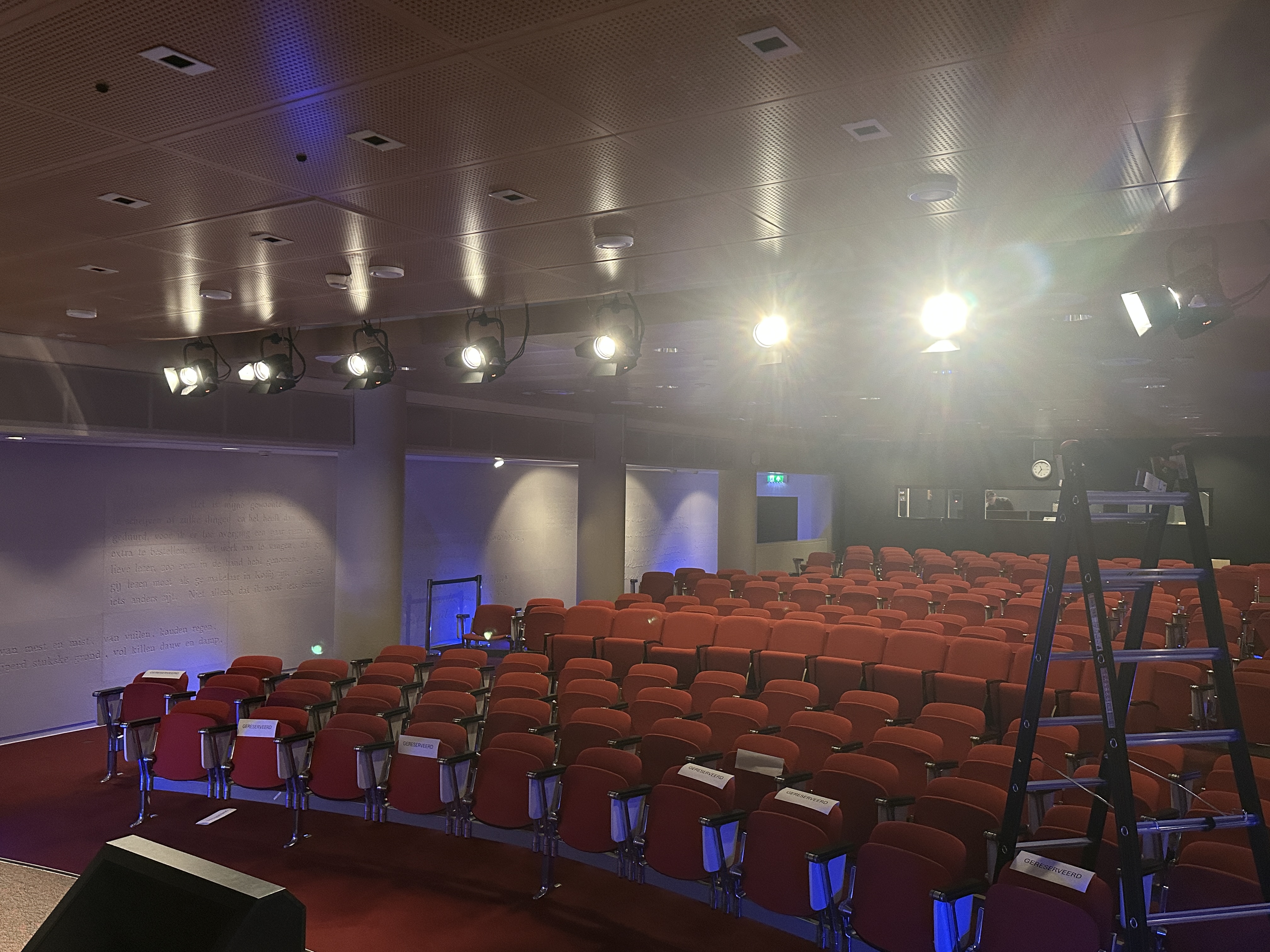
Technology never stands alone. The requirements for sound, visuals, and lighting are entirely dictated by what happens on stage. A plenary opening for four hundred people requires something different than a series of parallel sessions in smaller rooms. A panel discussion with four speakers places different demands on microphones than a single keynote.
By aligning the program and technology early, bottlenecks become visible before they turn into problems. How many microphones are needed, and of what type? Do presentations need to be shown on multiple screens simultaneously? Is there a moderator who needs to seamlessly transition from one topic to another? The sooner these questions are addressed, the smoother the preparation will be.
Plan ahead for hybrid and recording
More and more conferences now have an online audience in addition to the in-person attendees. A livestream or hybrid setup isn't just a matter of adding a camera; it requires a well-thought-out approach to video, audio, and internet connectivity. The online audience must receive the same quality as those in the room, otherwise they will disengage.
Recording also deserves early attention. Do you want to make the sessions available afterwards, as a knowledge base, member service, or promotion for next year? This will partly determine how you set up the recordings. It's much easier to consider this beforehand than to discover afterwards that the quality isn't quite sufficient. Those who want to organize a conference with an eye on the long term make this decision early.

International conference: factor in interpreters and multilingual support
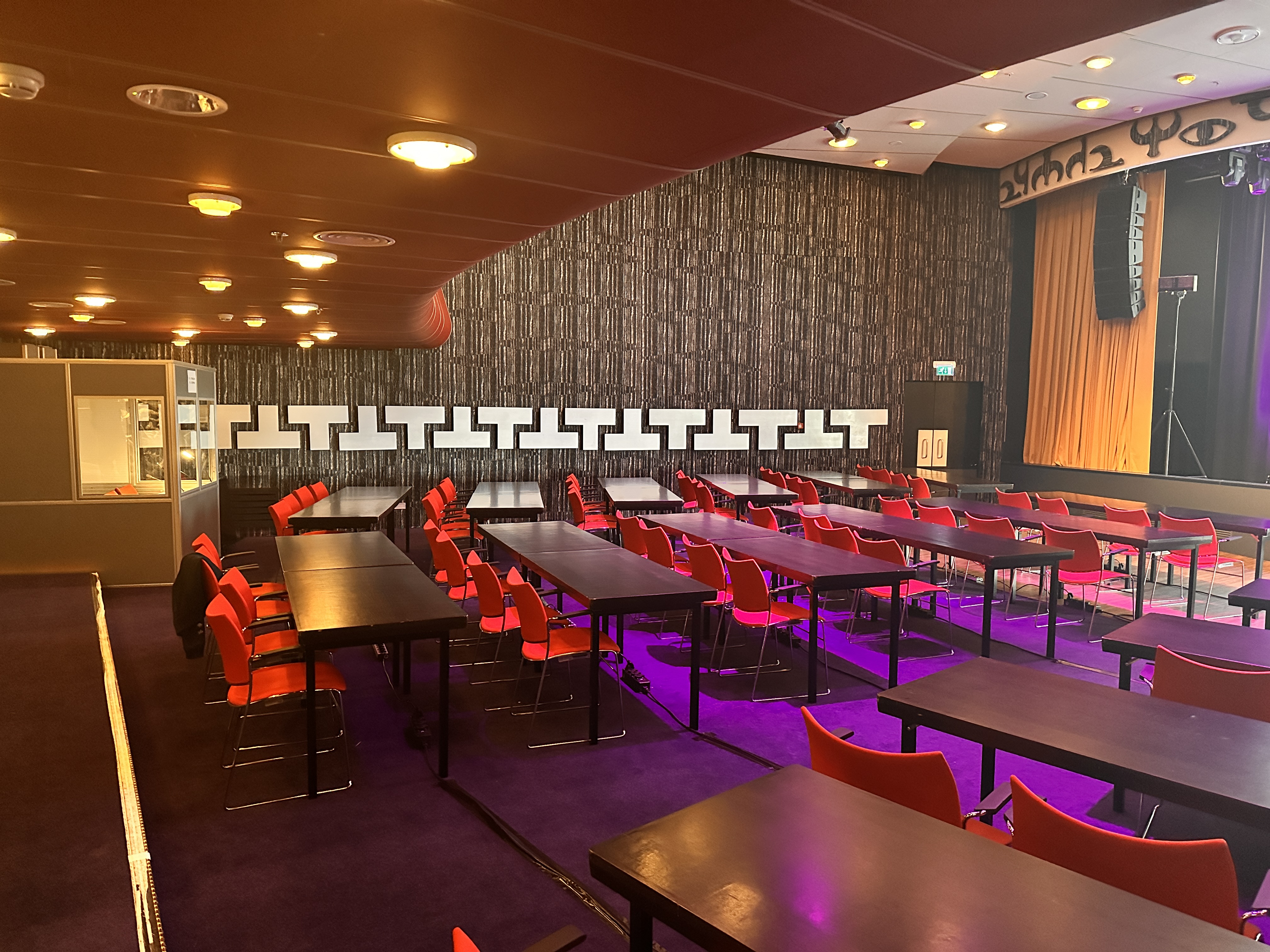
For international conferences, there's an additional layer: language. Simultaneous interpretation requires interpreter booths, receivers for the audience, and an audio setup that cleanly transmits the translation. These kinds of provisions cannot be arranged at the last minute, especially not during the busy autumn season.
Those who incorporate multilingualism early in the planning prevent it from becoming an afterthought. The interpreters, technology, and room layout are interconnected, and this only works if they form a cohesive whole from the outset. It is precisely here that it pays to entrust all components to a single party, ensuring that technology, translation, and recording are seamlessly integrated.
From fragmented plans to flawless execution
Organizing a conference in the autumn ultimately comes down to having a clear overview. It's not the fanciest equipment that makes the day a success, but the degree to which all components are perfectly coordinated. Technology, program, speakers, any interpreters, and registration must all align seamlessly. If this is thoroughly planned beforehand, everyone involved can focus on what truly matters on the day itself.
With over sixty years of experience, we at IFS know that a smooth conference day hinges on thorough preparation in the weeks and months leading up to it. A seamlessly executed autumn conference is almost always one where the technical aspects were secured during the summer. By starting now, you'll maintain composure later, even as everyone else's calendars become packed.