Lighting up a building in the winter months makes it visible, recognisable and welcoming from the moment darkness falls. With weatherproof LED floodlights such as the ADJ 32 HEX Panel IP you can light a facade in any colour you like, without a permanent installation. The key decisions are placement, colour and a sound power plan.
From late October the sun sets earlier every day. In December it is dark by half past four, and with that a large share of the buildings on the street literally disappear from view. Offices, hotels, conference venues and monuments that have a clear face during the day become a dark mass in the evening. Precisely in the period when many visitors arrive for receptions, Christmas drinks and year-end gatherings.
Building facade lighting is a relatively simple way to change that. In this blog we explain why lighting a facade has so much impact in winter, how the ADJ 32 HEX Panel IP works and what to consider when it comes to placement, colour, power and the surroundings.
Why light up a building in the dark months
Light on a facade does three things at once. It makes a building easy to find: first-time visitors see straight away where they need to go. It creates a sense of safety: a lit entrance and facade feel more accessible than a dark square. And it says something about the organisation: a building that is neatly lit in the evening conveys care and hospitality.
In the winter months there is something more. During the festive season people expect atmosphere. A facade in warm white light or a subtle festive colour visibly contributes to that, for staff and guests as well as for passers-by. For an evening event, facade lighting is also the first thing visitors see of the evening, before they have even stepped inside.

What is the ADJ 32 HEX Panel IP?
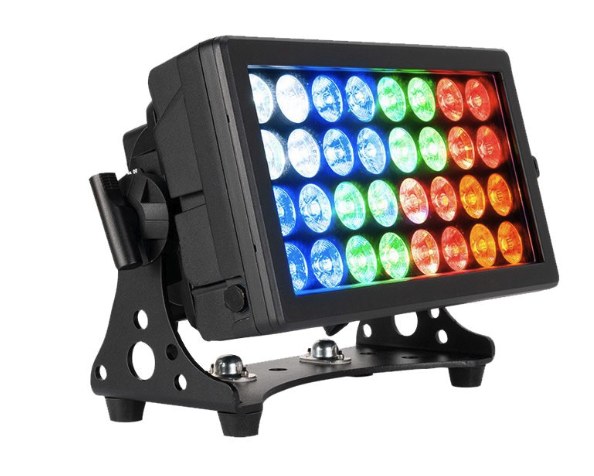
The ADJ 32 HEX Panel IP is an LED floodlight designed specifically for outdoor use. The fixture contains 32 powerful LEDs of 12 watts each. Every LED combines six colours in a single source: red, green, blue, white, amber and UV. This makes saturated colours, soft pastel tints and various white colour temperatures all possible.
What matters for outdoor use is the IP65 protection rating. This means the fixture is dust-tight and resistant to water jets from any direction. Rain, sleet and a damp winter night are therefore no problem. The power and control connections are also watertight and locking.
The beam angle is 24 degrees, which makes the fixture suitable for lighting a facade from the ground up to a considerable height. With the supplied frost filter the beam becomes wider and softer, which is useful for an even surface. Light output is just over 1,300 lux at five metres at full intensity. The fixture is divided into eight individually controllable zones, so colour gradients within a single fixture are possible too. It is also flicker-free, which matters when filming or photographing. Power consumption is a maximum of 220 watts per fixture.
How to light a facade properly
The most common technique is uplighting: the fixtures stand on the ground, close to the facade, and shine upwards at an angle. The light then grazes the brickwork, window frames and mouldings, bringing out the structure of the building. The closer the fixture is to the wall, the stronger that grazing effect and the more relief you see.
A practical rule of thumb is to place the fixtures at regular intervals along the facade so the beams just meet. With a 24 degree beam angle, the beam is roughly two metres wide at a distance of five metres. For an even result on a wide facade you will need several fixtures, or a greater distance from the facade combined with the frost filter.
Be deliberate about what you light. Not every part of a facade needs light. Columns, an entrance, a small tower or a striking corner often make more of an impression than an evenly lit surface. Choosing accents creates depth and keeps the building recognisable.
Choosing a colour: warm white, brand colour or festive
Colour largely determines how a building comes across. For historic buildings and classic facades, warm white almost always works best. It brings out natural stone and brick without changing the character of the building.
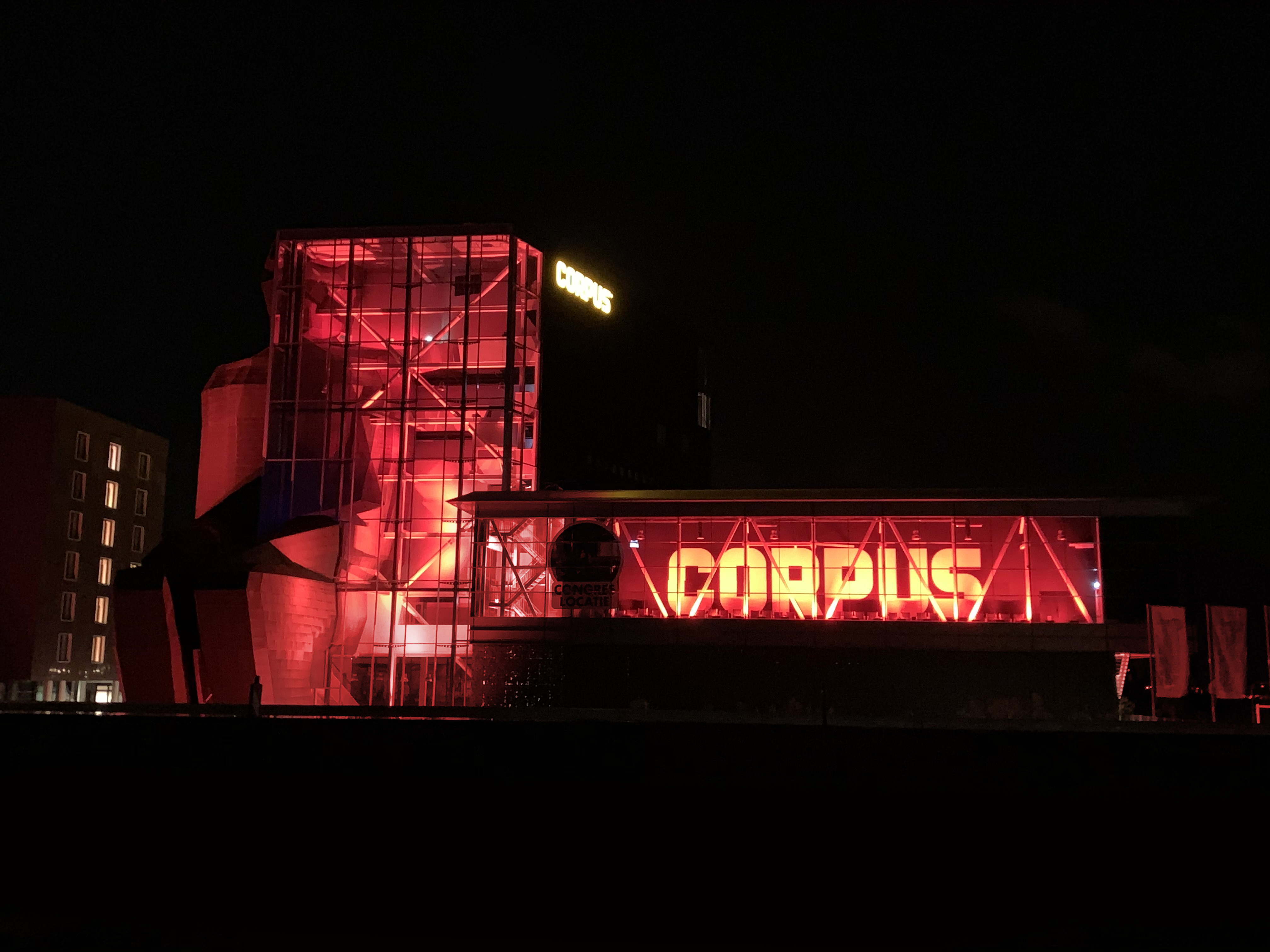
Modern office buildings and conference venues can also carry a brand colour well. That works strongly for a corporate event or anniversary, provided the colour is saturated enough to hold its own outdoors. Around the festive season many organisations choose a combination: a base of warm white with an accent in a festive colour on the entrance or a few columns.
With eight separate zones per fixture, a calm colour transition is also possible. Use it sparingly. A facade that slowly changes hue can be beautiful on an evening with guests. For facade lighting that stays in place for weeks, a fixed, calm colour is usually more pleasant for the surroundings.
Power, control and weather
Each fixture needs a maximum of 220 watts. At 230 volts, up to six fixtures can be linked in series on a single power circuit. That keeps the cabling tidy, but it does require a power point nearby. For a facade without an outdoor socket, a cable to the inside or a separate outdoor connection is needed. Route cables so nobody can trip over them, and cover them where people walk.
The fixtures can be controlled via DMX, the standard in lighting technology. This lets you set colour, intensity and any effects centrally. For facade lighting that stays up for weeks, a fixed setting with a timer is often sufficient: on at sunset, off at a set time during the night.
Although the fixtures are watertight, a sturdy and safe setup remains important. Place them securely, especially at windy locations, and make sure they cannot easily be moved or damaged by passers-by.
Taking the surroundings into account
Facade lighting is meant for the building, not for the neighbours. Aim the fixtures so the light falls on the facade and not into the windows of homes or the eyes of traffic. Light that spills past the facade into the sky also contributes to light pollution. A well-aimed setup and a reasonable switch-off time prevent complaints.
If the building is at a heritage location or in a protected townscape, consult the municipality in advance. Temporary lighting is usually perfectly possible, but it is good to know that for certain beforehand. The same applies to placement on public ground.
From practice
An office building in a city centre can be lit in warm white for the whole of December, with an accent in the brand colour on the entrance. Staff and visitors then see the building from the street corner, and on the evening of the Christmas drinks the entrance is instantly recognisable.
For an evening reception in a historic building, often just one evening matters. The fixtures are then only in place during the reception, and the colour can follow the programme: warm white on arrival, a festive tint during the toast.
A conference venue with several evening programmes in winter often opts for rental over a longer period. The fixtures stay in place and the settings are adjusted for each event. With more than sixty years of experience in AV technology, we see that this combination of a fixed setup and flexible colour delivers the most in practice.
Frequently asked questions
How many fixtures do I need to light up a building?
That depends on the width of the facade and what you want to light. As a rule of thumb, place a fixture every two to three metres so the beams meet. For accents on columns or an entrance, four to six fixtures are often enough.
Can the ADJ 32 HEX Panel IP stay outside in the rain?
Yes. The fixture has an IP65 protection rating, making it dust-tight and resistant to water jets. The power and DMX connections are also watertight and locking.
How much power does LED facade lighting use?
An ADJ 32 HEX Panel IP uses a maximum of 220 watts. Ten fixtures at full output therefore need a maximum of 2.2 kilowatts. In practice consumption is lower, because all colours are rarely at full intensity at the same time.
Can I rent facade lighting for the whole winter?
Yes. Facade lighting can be used for a single evening, but also for a longer period such as the month of December or the entire winter season. The fixtures stay in place and the colour or times are adjusted as required.
In closing
Lighting up a building in the dark months makes it visible, welcoming and recognisable at the very moment most buildings disappear into darkness. With weatherproof fixtures such as the ADJ 32 HEX Panel IP this is possible without a permanent installation, in warm white, in a brand colour or in a festive tint. If you think ahead about placement, colour, power and the surroundings, you can have a facade within a few hours that makes the difference all winter long. We are happy to advise on a specific building.