What do you need for a professional translation
during conferences and court cases?
Whether you're organizing an international conference or preparing a court case involving multiple languages, professional interpreting services are not a luxury, but a necessity. However, many clients do not know exactly what it takes. In this article, we explain which elements are essential for qualitative translation in legal and conference settings.
Choosing the right interpreting technique
Not every situation requires the same approach. There are two main techniques that are used in professional practice:
Simultaneous interpreting takes place in real time: the interpreter translates while the speaker is speaking. This is the standard at major conferences, international conferences and EU meetings. The audience receives the translation via an earpiece, without interrupting the progress of the meeting.
Consecutive interpreting works differently: the speaker pauses, after which the interpreter renders the words said in the target language. This technique is often used in court hearings, police interviews, notarial acts and small-scale business conversations. It requires an excellent memory and a controlled note-taking method.
Whisper interpreters is a variant of simultaneous interpreting, suitable for small settings where only a limited number of people need a translation. The interpreter sits in the room and uses a tour guide system to make a portable transmitter with earphones for the audience and the translation audible to the right people. This way, the meeting is not disturbed, while everyone still receives the information in their own language.
AI interpreters is an emerging technology where artificial intelligence translates spoken language in real time. It offers advantages in speed and scalability, but still has limitations in terms of nuance, technical language and legal accuracy. For informal or accessible situations, AI interpreting can be a cost-efficient addition; for conferences and court cases, the use of a certified human interpreter remains the professional standard.
The choice between these techniques depends on the setting, the number of participants, the required accuracy and the desired turnaround time.
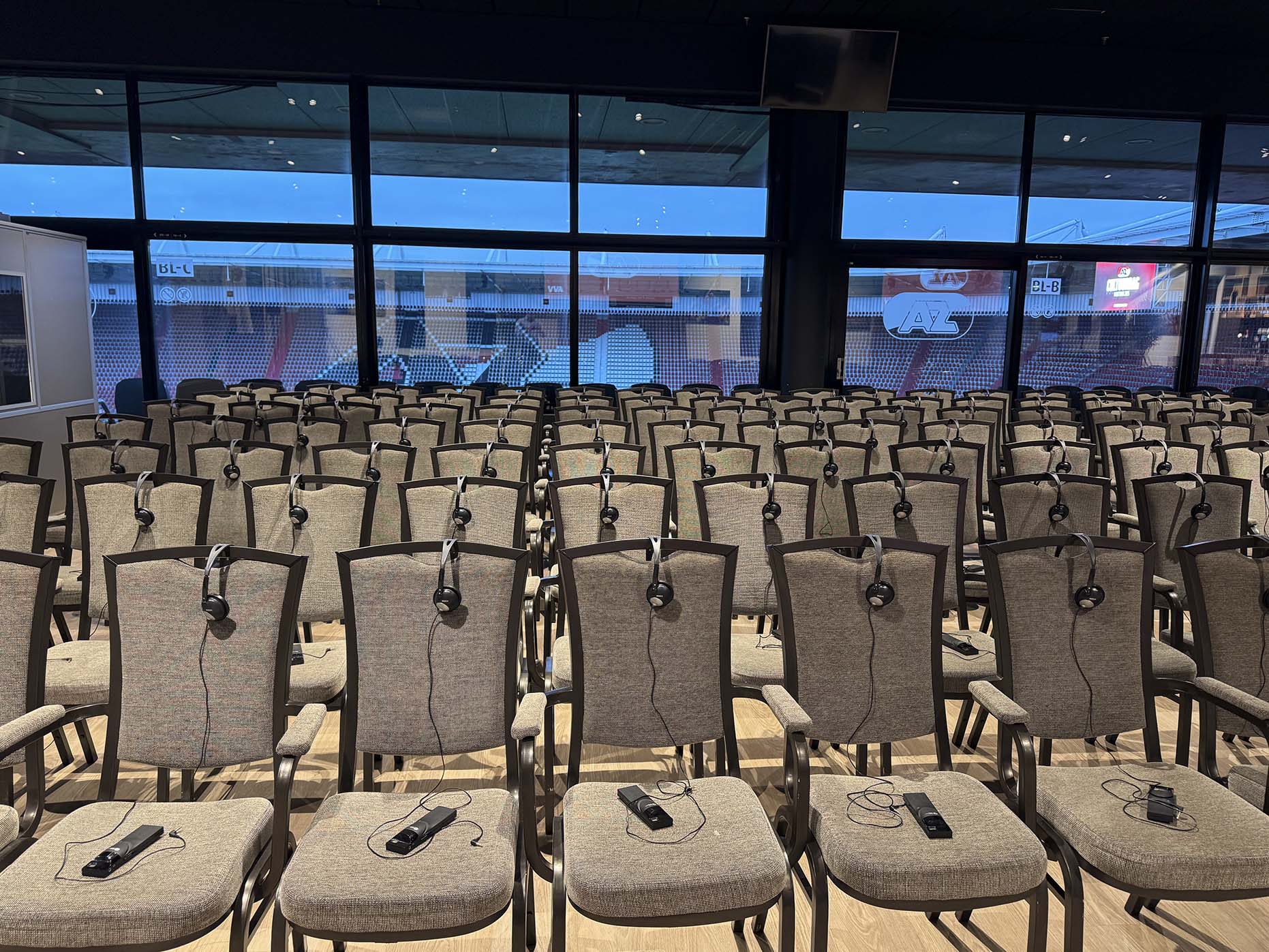
Technical equipment for simultaneous interpretation
Simultaneous interpreting requires specialized equipment. The good news: we have all the necessary AV technology completely in-house. So you don't have to hire a separate technical supplier, we arrange everything under one roof.
Think about:
Interpreting booths —soundproofed booths from which interpreters work so that they can hear the speaker without causing interference themselves
Receivers and earphones — for each participant who wants to follow the translation.
Transmitting devices and infrared installations — for wireless transmission of sound in the auditorium.
Microphones and an audio control system — for clear sound capture by the speakers.
Because we have the technology ourselves, we can switch quickly, thoroughly test the installation beforehand and intervene immediately during the event if necessary. This gives you, as a client, peace and security.
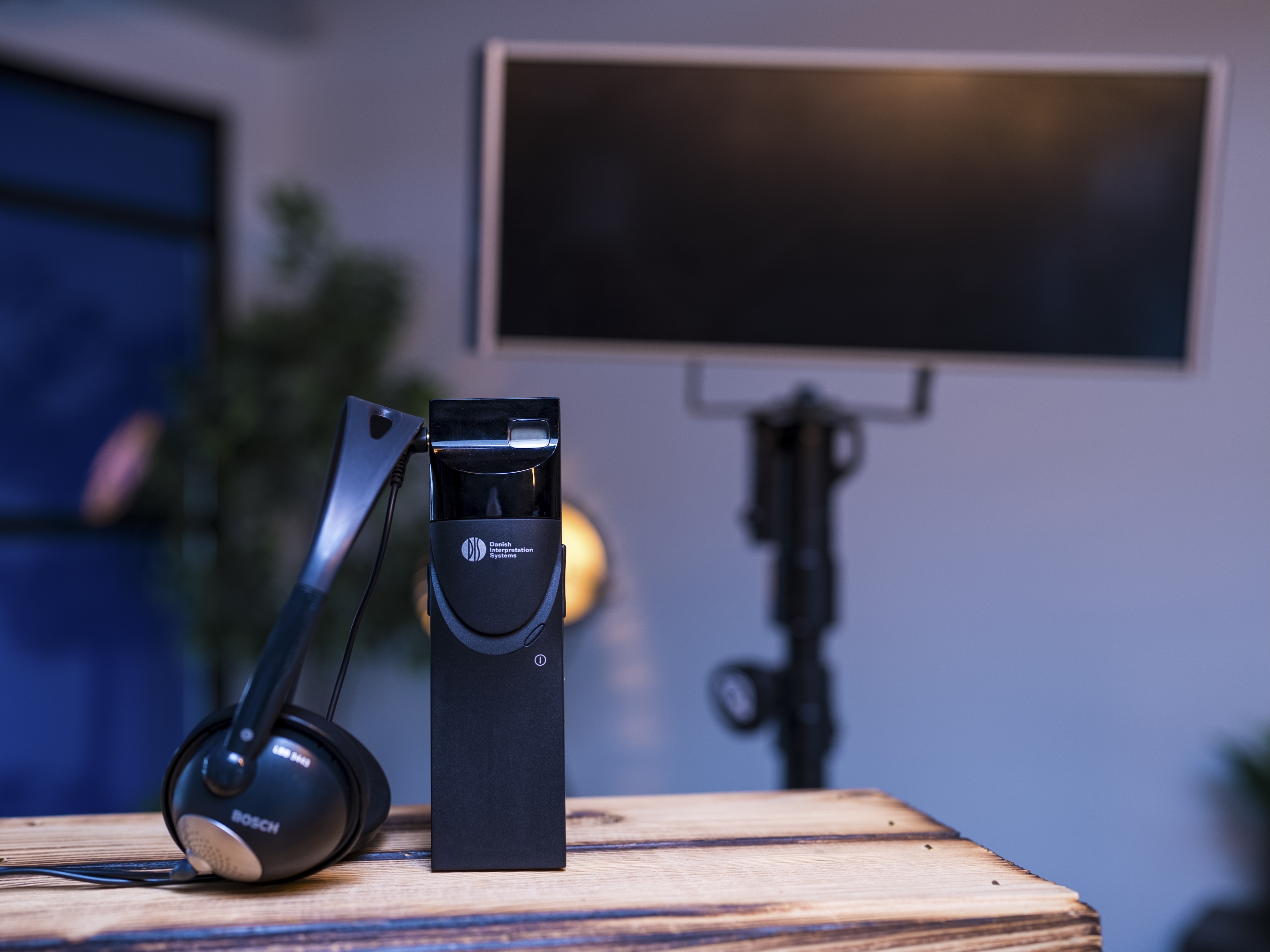
Technical equipment for whispering interpreters
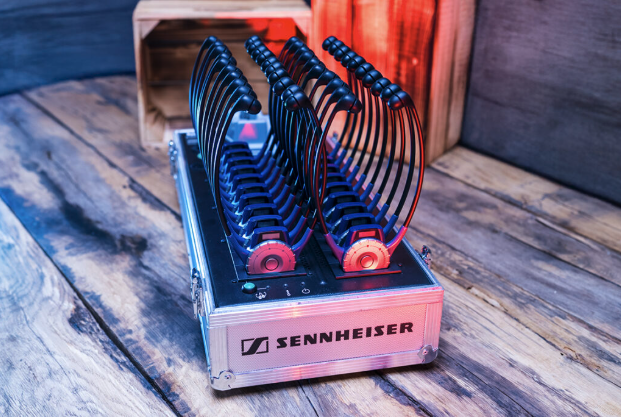
For whispered interpreters, we work with professional tour guide systems. The interpreter wears a compact transmitter and speaks via a microphone; the audience receives the translation wirelessly via lightweight earphones. To do this, we work with the Sennheiser tour guide HD 2020, a reliable and high-quality system that offers clear sound quality, a stable wireless connection and ease of use for participants. The system is discreet, easy to set up and suitable for tours, small meetings and business calls where only a limited number of people need a translation.
In addition, we also offer this system in a hybrid form. In this setup, the interpreter works from his own interpreter station, similar to a full-fledged simultaneous setup, while the translation reaches the audience as if still wireless via the tour guide system. This offers the interpreter more comfort and concentration, and is ideal for longer sessions or situations where a fixed workplace is desirable without the complexity of a full interpreter booth.
Certified interpreters with professional expertise
A professional interpreter is more than someone who speaks two languages. There are high standards for conferences and court cases:
- Sworn interpreters are registered in the Netherlands in the Register of Sworn Interpreters and Translators (Rbtv). Legal proceedings such as court hearings, interrogations or notarial acts require registration in this register. For conference interpreters, the AIIC (Association Internationale des Interprètes de Conférence) is also an international quality label. AIIC interpreters have proven experience, meet strict professional standards and work according to fixed rules of conduct in the areas of preparation, working conditions and professional ethics.
- Professional knowledge is indispensable. An interpreter at a medical conference must master medical terminology; an interpreter in a criminal case must be familiar with legal jargon.
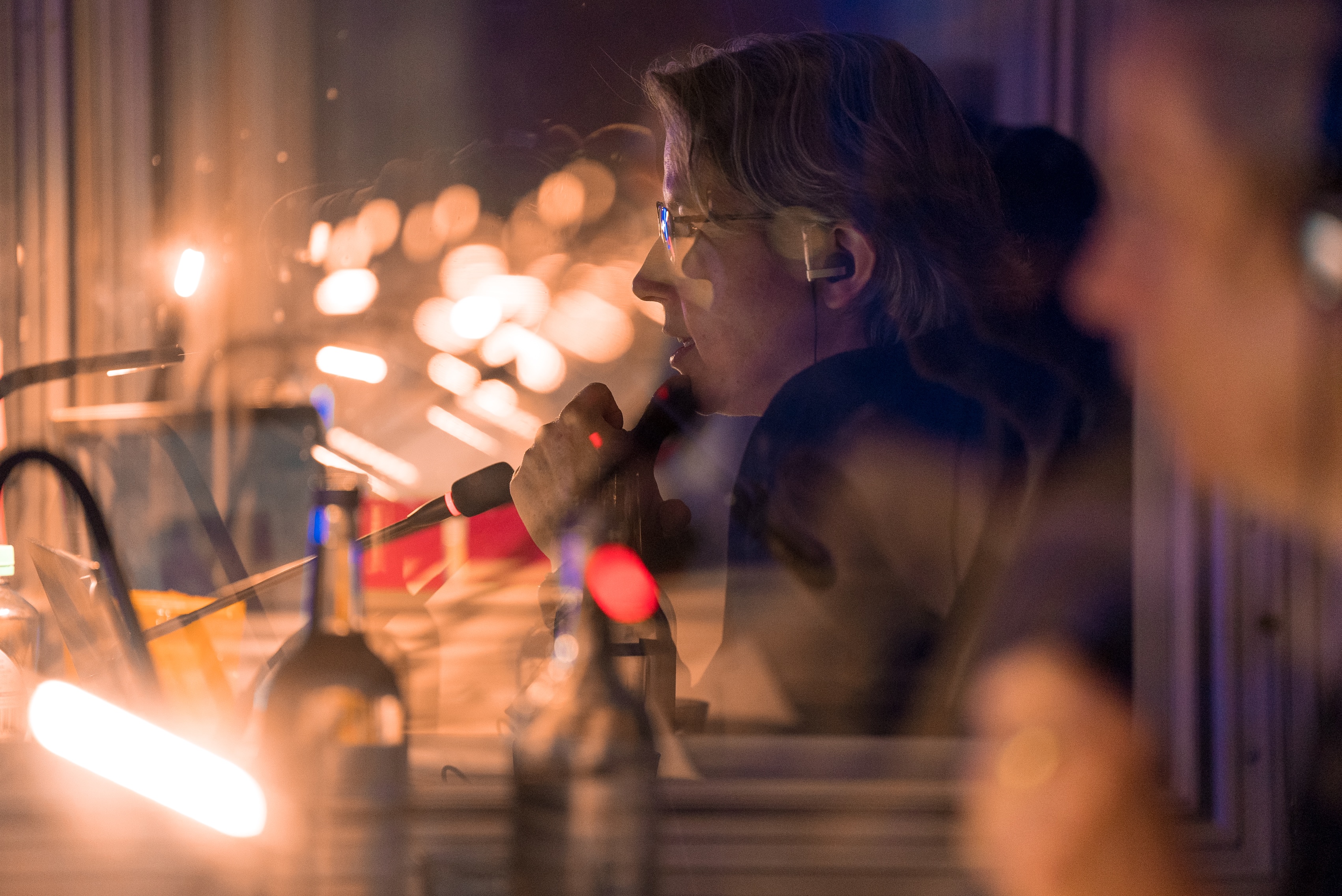
- Working in couples In the case of simultaneous interpretation, the professional standard is that interpreters work in pairs and alternate every 20 to 30 minutes, to prevent loss of quality due to fatigue.
When selecting an interpreter, we always ask for relevant accreditations, field experience and familiarity with the specific context of your meeting. This is how we ensure that you always have the right interpreter in the right place.
Preparation and documentation
A good translation starts well before the day itself.
Interpreters need preparation time and benefit from:
Speaker documents and presentations — so that they can look up terminology and familiarize themselves with the content.
Glossaries and glossaries — with technical terms that are relevant to your sector or business.
Agenda and program — so that the interpreter knows what will be covered and when.
The sooner you provide these materials, the better the quality of the interpretation service.
Logistic considerations
In addition to the content side, there are practical issues to take into account:
Location check — we visit the hall beforehand to assess the acoustics, space for cabins and technical connections and to perfectly adapt our equipment to the location.
Timely briefing — inform the interpreter about the expected pace of speech, any accents from speakers and the purpose of the meeting.
ISO-certified interpreting booths — our interpreting booths comply with the ISO 2603 standard, which sets strict requirements for dimensions, ventilation and sight lines. This guarantees optimal working conditions for the interpreters and thus the highest quality for your meeting.
When do you hire an interpreter?
For one-off assignments or complex multilingual settings, it is wise to use a specialized interpreting agency. We offer a complete one-stop solution: from recruiting certified interpreters to complete technical implementation with our own AV equipment. So you only have one point of contact for both the interpreting service and the technology.
Conclusion
Professional translation at conferences and court cases requires a combination of the right technology, certified interpreters with expertise, adequate equipment and good preparation. Because we manage all the AV technology in-house, you can count on smooth, integrated execution without the hassle of multiple suppliers.
Do you have questions about hiring interpreters or setting up an interpreting service for your meeting? Contact us for customized advice.
Keywords: interpreting technology, simultaneous interpreting, consecutive interpreting, sworn interpreter, conference interpretation services, court interpreter, interpreter booth, hire an Rbtv interpreter