Organizing a Summer Event: Key Considerations for Outdoor Sound, Visuals, and Technology
Organizing a summer event often feels simpler than a conference held indoors. The sun is shining, people are in a good mood, and the location speaks for itself. Yet, the outdoors is precisely where technology can quickly become a challenge. Wind carries sound away, direct sunlight makes screens unreadable, and an unexpected shower can instantly disrupt a day's program.
The foundation of a successful outdoor event is technology that works seamlessly in the background. The audience hears the speakers clearly, sees the visuals sharply, and is unaware of the underlying logistics. In this article, we share practical considerations that make all the difference, from sound and visuals to power and weather resistance.
Outdoor Sound: The Biggest Challenge
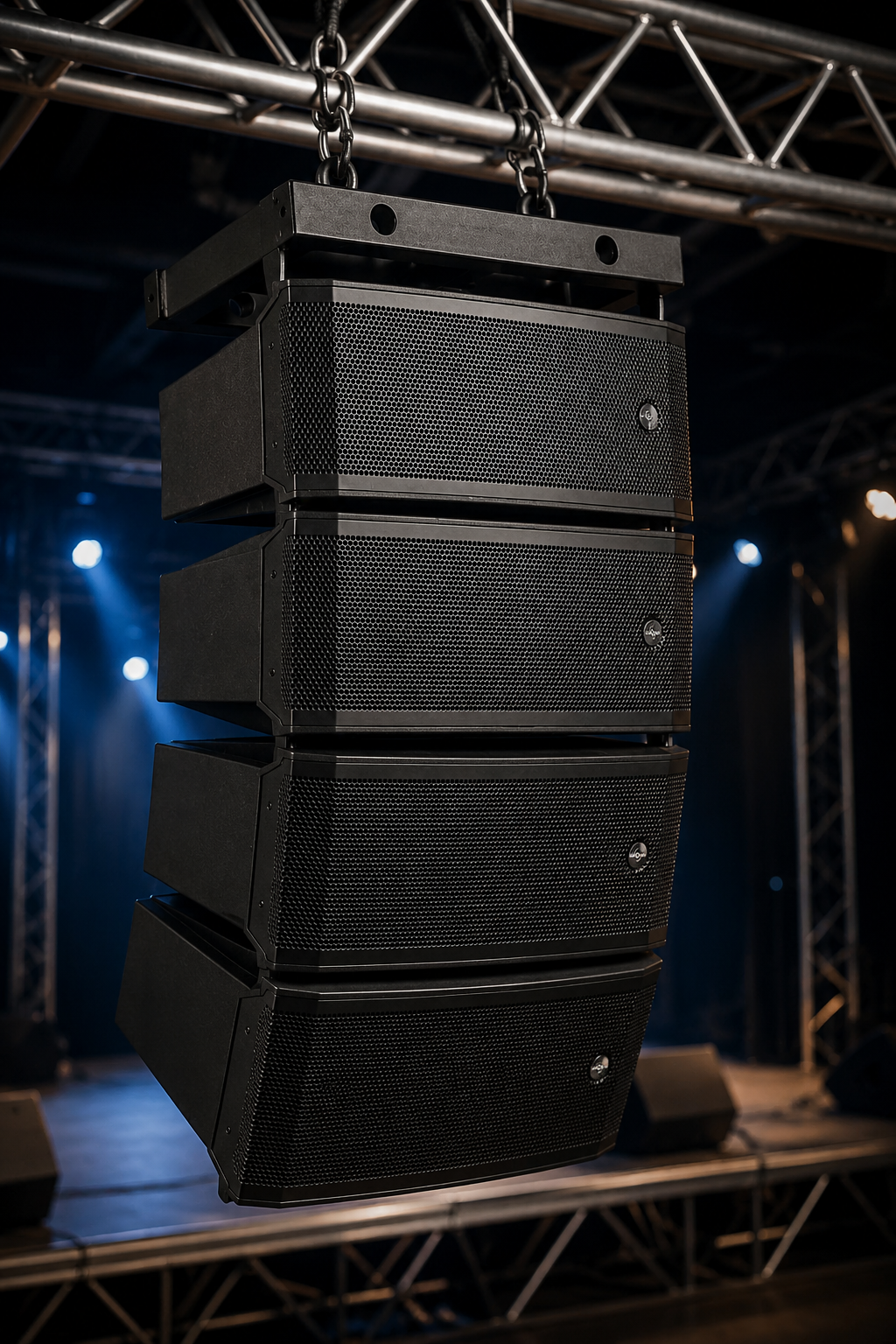
Indoors, sound reflects off walls and ceilings, meaning a compact setup is often sufficient. Outdoors, this reflection disappears completely. There's no enclosed space to contain the sound, so anything not directly projected into the crowd by the speakers is lost. Without the correct setup, a speaker can sound weak and unintelligible even from just ten meters away.
For even coverage, a line array or well-placed speaker distribution is more important than sheer power. The goal is for everyone on the premises to hear the same sound level, from the front row to the back. Also consider wind: a crosswind of just a few meters per second can literally blow away high frequencies, making speech less clear. A setup that accounts for this prevents you from having to crank up the volume halfway through the day and upsetting the neighbors.
Don't forget the surroundings either. Events near residential areas or businesses often have noise regulations. Those who properly adjust the setup and volume beforehand will stay within the rules and keep local residents happy.
Visuals That Remain Readable in Sunlight
A screen that looks great indoors can be completely washed out outdoors. Direct sunlight is many times brighter than most projectors and standard screens can handle. Projection onto a screen outdoors during the day almost never works, no matter how dark the screen.
The practical solution is an LED screen with sufficient brightness. These screens are designed to remain sharp and colorful even in bright light. For a product presentation, a speaker program, or a livestream with visual support, this makes the difference between a screen people watch and one they ignore. When positioning, pay attention to the viewing angle and the sun's position throughout the day, so the image remains clearly visible even in the afternoon.
Power: The Invisible Backbone of Everything
At an outdoor location, there's rarely an electrical outlet in the right place. Sound, visuals, lighting, and catering combined can quickly draw more power than a single household connection can handle. A well-thought-out power plan is therefore just as important as the equipment itself.
In practice, this means calculating in advance how much power each component requires and distributing the load across multiple circuits. This prevents a peak in usage from shutting down the entire setup. At locations without sufficient grid power, a generator offers a solution, provided it's placed quietly enough so its noise doesn't disrupt the program. Cabling also deserves attention: cables across walkways should be covered, both for safety and for a tidy appearance.
Weatherproofing: hoping for sun, planning for rain
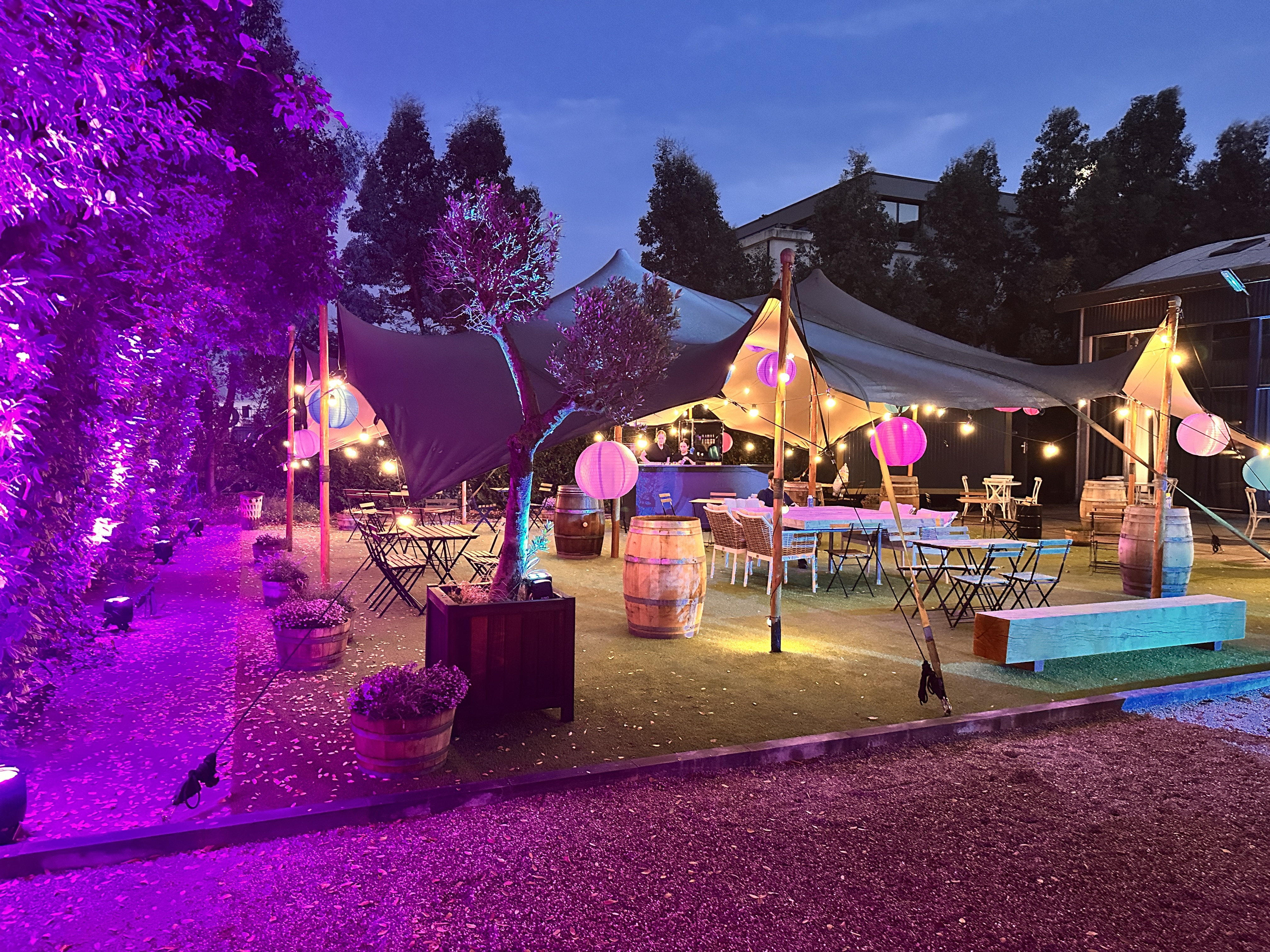
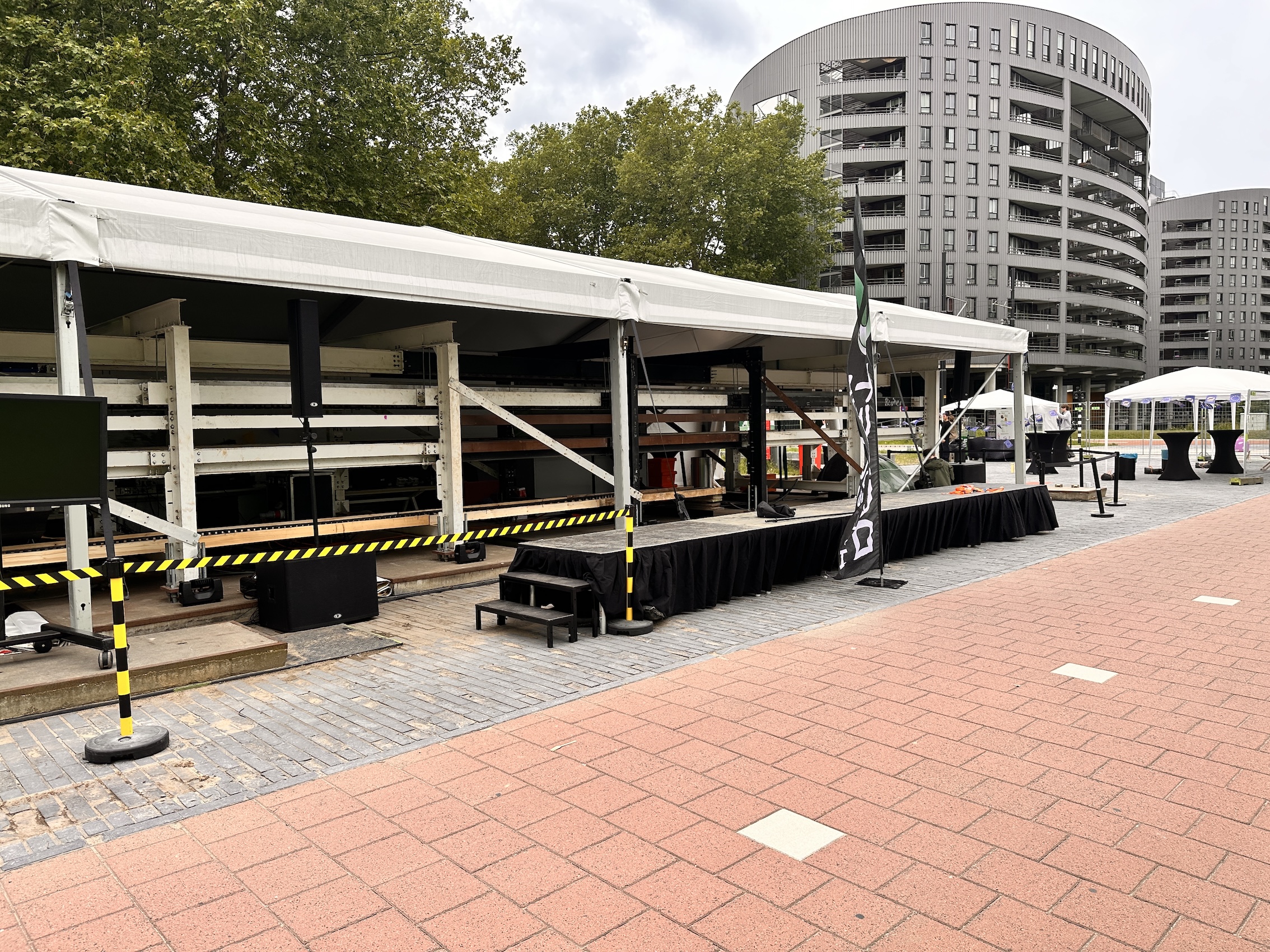
The Dutch summer is unpredictable. A sunny morning can turn into a heavy afternoon shower. Professional equipment and water don't mix, so a canopy or a weather-resistant setup is not a luxury but a prerequisite. This applies to the technology behind the scenes as much as it does to the stage.
Think ahead about a scenario where the weather is uncooperative. Where will the equipment stay dry? Is there a canopy for the operators? Can the program be moved indoors without too much hassle if absolutely necessary? Anyone who answers these questions before the event starts won't be caught off guard when the sky darkens.
Organizing a summer event during peak season: plan the tech early
The summer months are busy for events, which means good equipment and experienced technicians are quickly fully booked. Anyone planning a summer event would be wise to book the technical equipment early. This allows time to scout the location, determine the setup, and review scenarios, instead of scrambling at the last minute with whatever is still available.
A site visit beforehand almost always pays off. On paper, a site might seem straightforward, but only on location does it become clear where the sun will be, how the wind will sweep across the field, and where the power needs to come from. That knowledge directly translates into a setup that simply works on the day of the event.
From individual equipment to a cohesive whole
Organizing a summer event isn't ultimately about the fanciest individual devices, but about a whole that works together seamlessly. Sound that carries everywhere, visuals that remain legible, power that lasts, and a setup that can withstand a shower. When these components are coordinated, the technology fades into the background, and what truly matters remains: a program that resonates with the audience.
With over sixty years of experience in AV technology, we at IFS know that, especially outdoors, the details make all the difference. A well-prepared summer event doesn't start with the equipment, but with the question of what the audience should hear, see, and experience. The technology follows from that. Anyone who plans in that order keeps a cool head, even when temperatures rise.