Debate setups: the right room layout for an effective debate
The layout of a meeting room or conference room largely determines how a debate takes place. A thoughtful debate setup ensures that speakers and participants can look at each other, that microphones are positioned correctly and that everyone in the room can follow the contributions properly. If you choose the wrong setup, even the best content program can run aground with practical limitations.
This article provides an overview of the most used debate setups, with attention to the use, acoustic effects and AV technical requirements per setup. Whether you are organizing a council meeting, an academic debate or a plenary session at a conference: the choice of composition is always a conscious decision.
Why choosing the debate format is so important
A debate is more than an exchange of arguments. It is a communication process in which the spatial layout has a direct influence on the dynamics. Debaters who can look at each other react differently than when everyone is facing the same side of the room. A U setup invites direct interaction; a theater setup focuses on the stage.
In addition to the dynamics, technology also plays a major role. The position of microphones, the placement of screens and the acoustics of the room must be tailored to the chosen setup. What works in a small conference room often doesn't work in an auditorium of three hundred people.
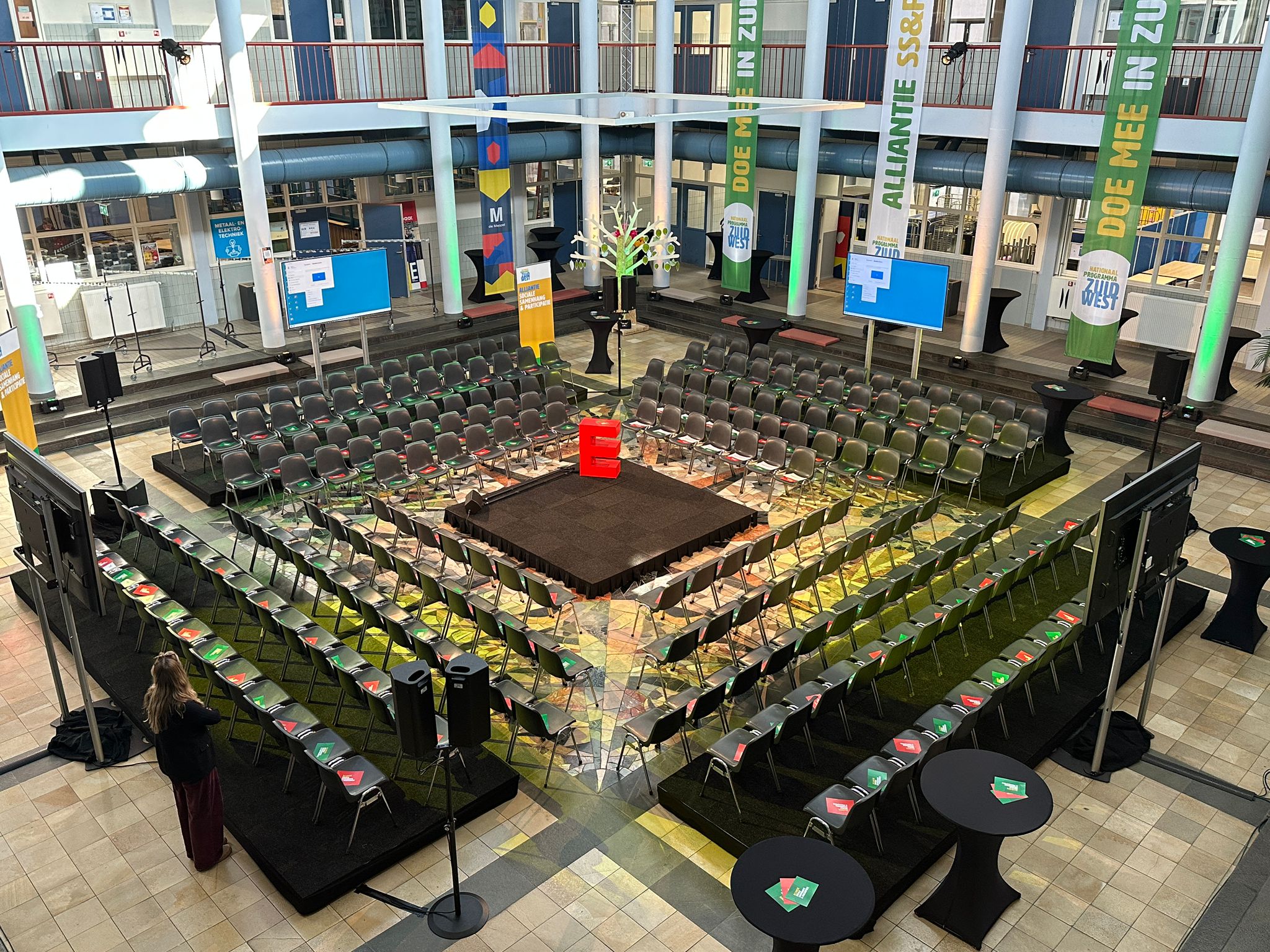
The most used debate setups
Theatre setup
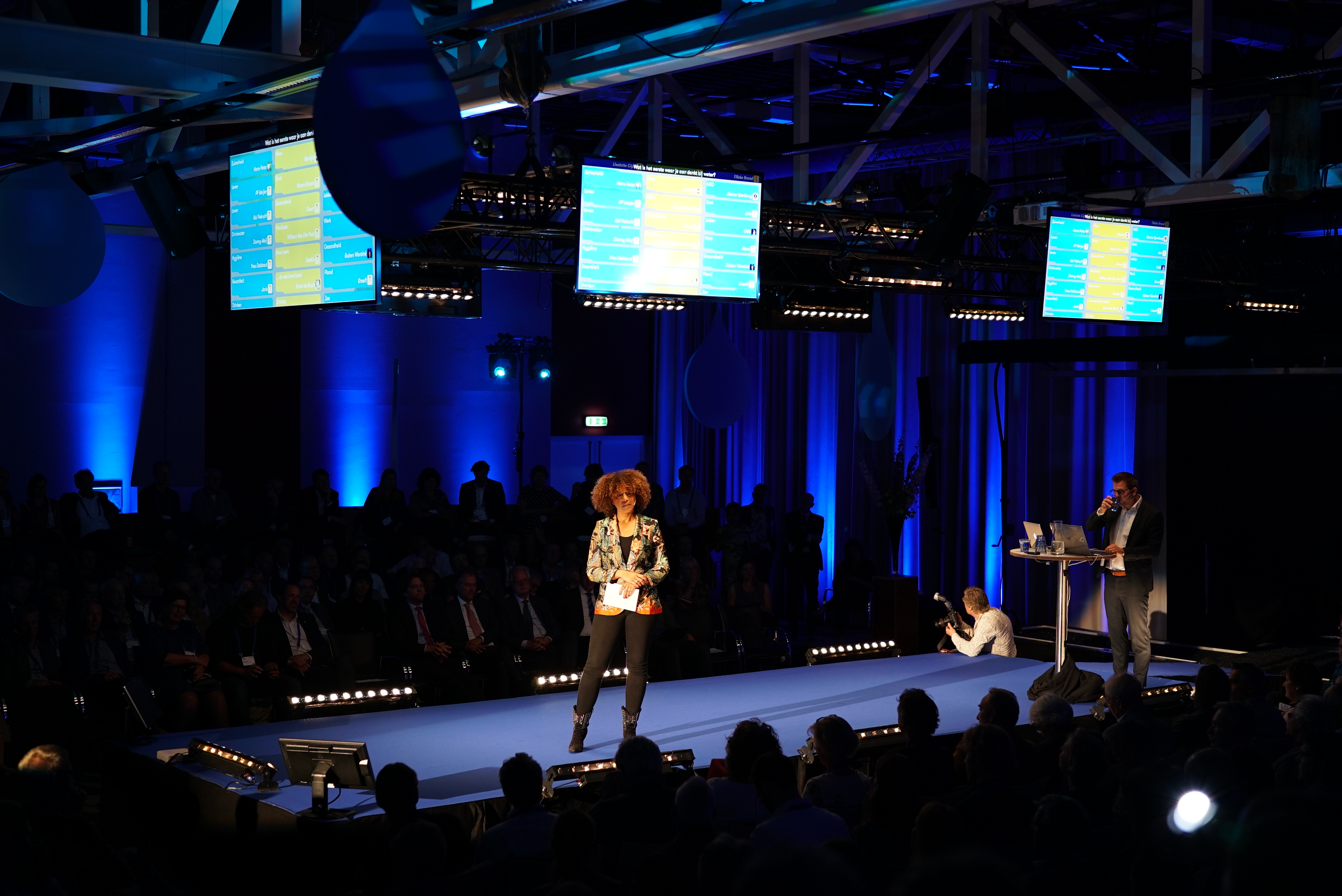
In the theater setup, all participants sit in rows facing a stage or lectern. This is the most common setup for major debates, plenary sessions and political meetings. The advantage is that the hall can accommodate a large audience. The disadvantage is that interaction between room participants remains limited.
For AV technology, this means that the sound reinforcement installation must be aimed at the audience, possibly with delay speakers in the middle of the room for larger spaces. Onstage speakers use handheld microphones, static stage seaters, or a wireless headset microphone.

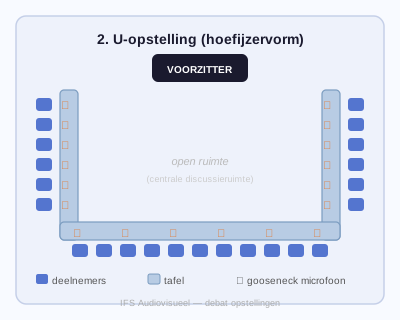
U setup
The U setup, also known as a horseshoe shape, is popular for board meetings, council meetings and work sessions where multiple speakers speak. All participants sit around a central open space and can look at each other. This promotes direct discussion and equal participation.
Technically, the U setup requires fixed gooseneck microphones on the table for each participant. The sound control captures all microphones via a mixing console or digital audio system. Good microphone management is crucial: speaking at the same time causes feedback if the levels are not set correctly.
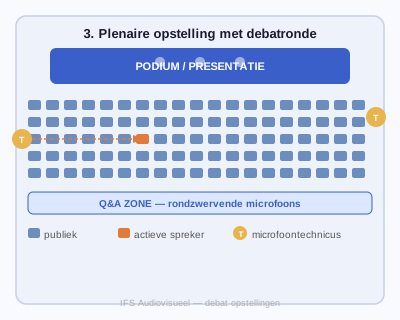
Plenary session with debate round
Larger conferences sometimes opt for a plenary setup where the audience sits in rows, but participants can speak from the auditorium via roaming microphones. This format combines the theater setup for the presentation with a Q&A phase where audience interaction is key.
Handling wandering microphones requires coordinated logistics. Two or three microphone technicians in the room ensure that the microphone quickly reaches the right participant. Combined with a digital mixing console, sound levels can be controlled per zone.
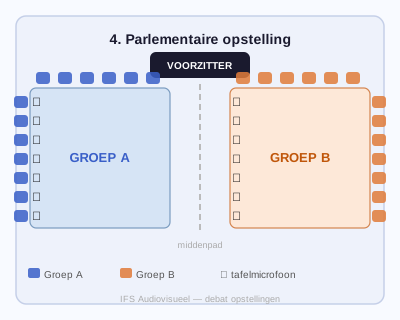
Parliamentary position
The parliamentary position is derived from the Westminster model, where two groups of participants sit opposite each other. This format is used at city councils, representative offices, and formal debate competitions. The confrontational position reinforces the dual nature of the debate.
The challenge with this setup is sound transmission: speakers are largely away from the audience, which requires extra attention to microphone selection and placement. Fixed table microphones combined with a sidefire speaker system provide the best results.
Panel format or stage setup
In a panel debate, three to six speakers sit on a stage, facing an audience. This format is often used for scientific debates, journalistic discussions and company presentations. A moderator controls the conversation.
The AV setup for a panel debate usually consists of clip-on microphones for each panel member, a lectern microphone for the moderator, and a screen or presentation wall behind the panel. Lighting plays an extra role here: the speakers must be well lit when the event is also being recorded or broadcast live.

AV technology tailored to the chosen debate setup
The choice of a debate setup immediately determines which AV equipment is needed. These are the most important technical issues.
Microphones. Opt for fixed table microphones for setups where participants sit in one place for a long time, such as the U setup or parliamentary setup. In a theater setup with Q&A, wireless handheld microphones are more convenient. Clip-on microphones are suitable when speakers are also moving.
Sound reinforcement. The acoustics of the room determine how much amplification is required. In a small venue, a simple PA system can do the trick; in a large conference room, a layered system with delay speakers is needed to ensure an even sound experience.
Screens and image display. Debates that also include presentations require a well-thought-out screen setup. In a theater setup, one or two large screens on stage are sufficient. With a U-shaped setup or round table, screens in multiple positions are desirable so that everyone has visibility.
Recording and live streaming. More and more debates are also being recorded or broadcast live. This requires additional cameras, a control station and a video stream setup. The choice of setup also affects camera positions: a theater setup is easier to film than a U setup where multiple camera positions are required for full coverage.
Practical experience in council rooms and convention centers
In practice, clear patterns are visible. Municipalities and provinces almost always opt for a parliamentary or U-position in council rooms, with fixed integrated microphone installations. Convention centers often work with flexible setups that are adapted to each event.
International organizations, such as UN meetings or European conferences, combine built-in microphone systems, interpreting booths and real-time recording in multiple languages. This places high demands on the synchronization of all systems.
Those who work with a temporary event and need to set up a hall will benefit from a supplier who understands both set-up logistics and AV technology. Indeed, the choice of the setup and the choice of equipment are communicating vessels.
The right attitude makes the debate
A good debate set-up is not an afterthought. It is the basis on which the debate operates. By linking the correct spatial layout to an appropriate AV technical installation, you create the optimal conditions for a clear and effective debate. Whether it's a city council meeting, an academic discussion evening or a major international conference: the set-up deserves a conscious and well-prepared approach.