Audio-visual support at an event: this is how you take your event to the next level
A great event starts with a strong story. But without the right technology, that story remains unheard, invisible, or misunderstood. Professional audiovisual support at an event ensures that your message reaches every participant, in every corner of the room. Whether it's a conference with a hundred visitors, a company presentation or a multi-day international conference: technology makes the difference between an event that impresses and an event that is forgotten.
What many organizers underestimate is how early in the process AV technology plays a role. The choice of the right equipment, the arrangement of screens, the acoustic properties of the location and the planning of technical support determine whether the event runs smoothly even before the first speaker takes the stage. In this article, we explain what to consider when organizing audiovisual support, and where the pitfalls lie.
Why good audiovisual support is essential
Imagine: a keynote speaker is on stage but the microphone cracks. The presentation slides are barely legible to the people in the back of the room. The livestream is faltering. These are not hypothetical scenarios, they are situations that occur regularly when AV technology is treated as an afterthought.
Good audiovisual support for an event is not a luxury, but a basic requirement. Sound and image are the primary communication channels between speaker and audience. When those channels don't function optimally, you not only lose your participants' attention, you also lose credibility. Investing in professional AV technology is therefore an immediate investment in the quality and appearance of your organization.
The building blocks of a successful event: sound, image and light
AV technology consists of three interrelated disciplines, each requiring its own expertise.
Sound is the most critical part. Poor audibility leads to dropout faster than any other technical problem. A good sound system is tailored to the room's acoustics: high ceilings, hard walls or a large table configuration all require a different approach. Wireless microphone systems, line array speakers, meeting discussion systems, and simultaneous translation systems are just part of the range of options.
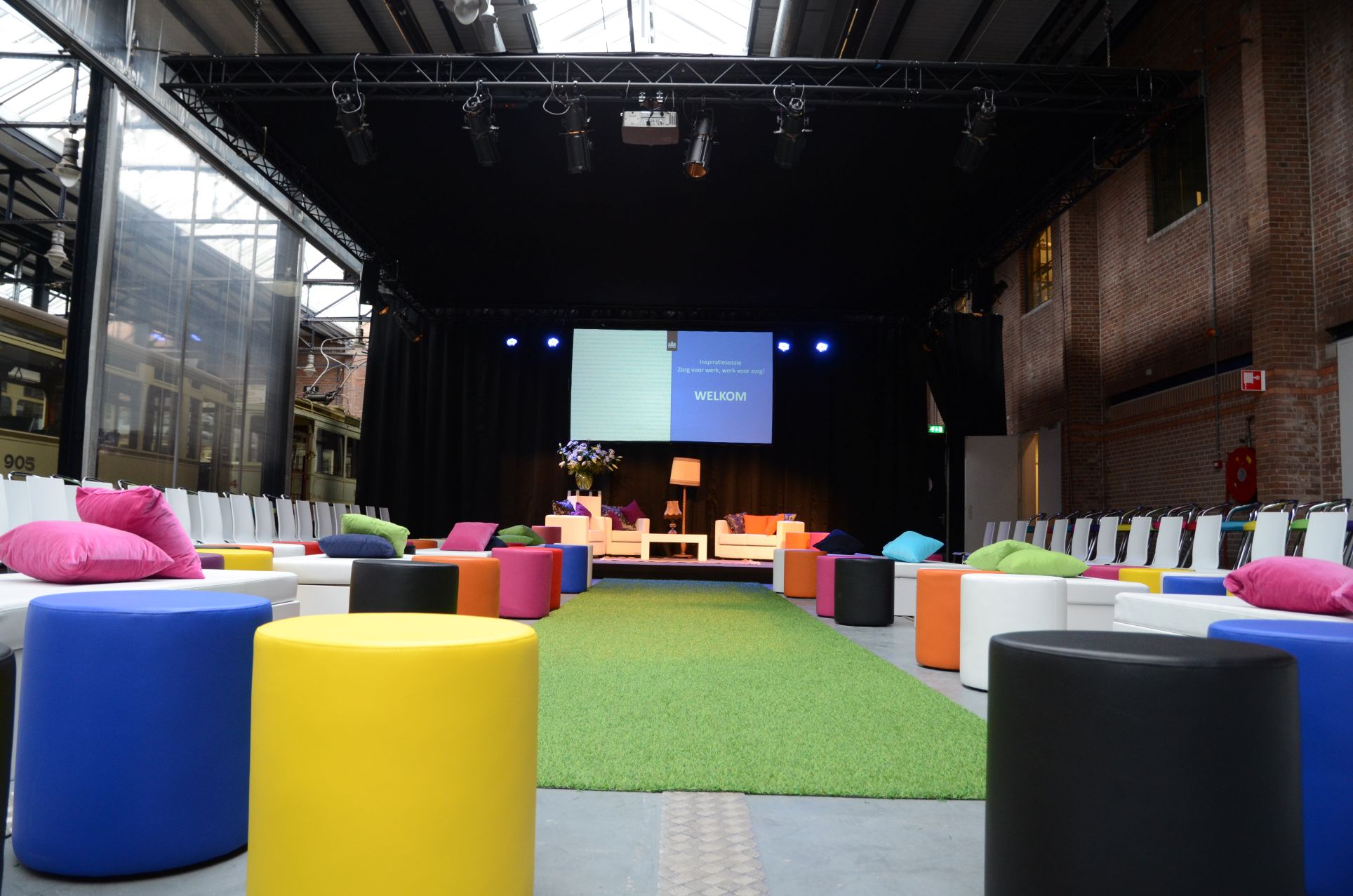
Image includes projection, LED screens and displays. The choice depends on the size of the room, the lighting conditions and the type of presentations that are given. A large projection screen works great in a darkened conference room, but LED screens or several smaller displays are often a better choice in a bright environment or in a more interactive setting.
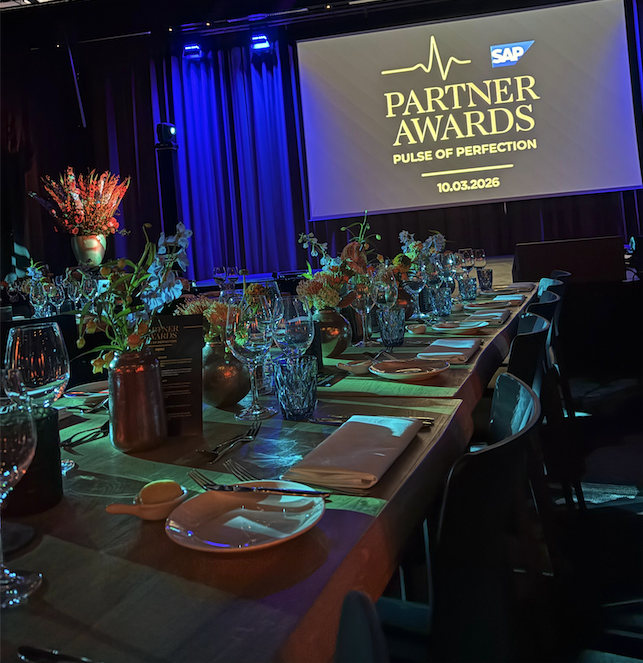
Light is often added last, but determines the atmosphere and familiarity of an event. Stage lighting ensures that speakers are clearly visible on camera and in front of the audience. Effect lighting in corporate colors reinforces the visual identity of your organization.
Audio-visual support for an event: from small to large
AV support is not limited to large-scale productions. The technology also deserves attention at a meeting with thirty participants or a hybrid team day.
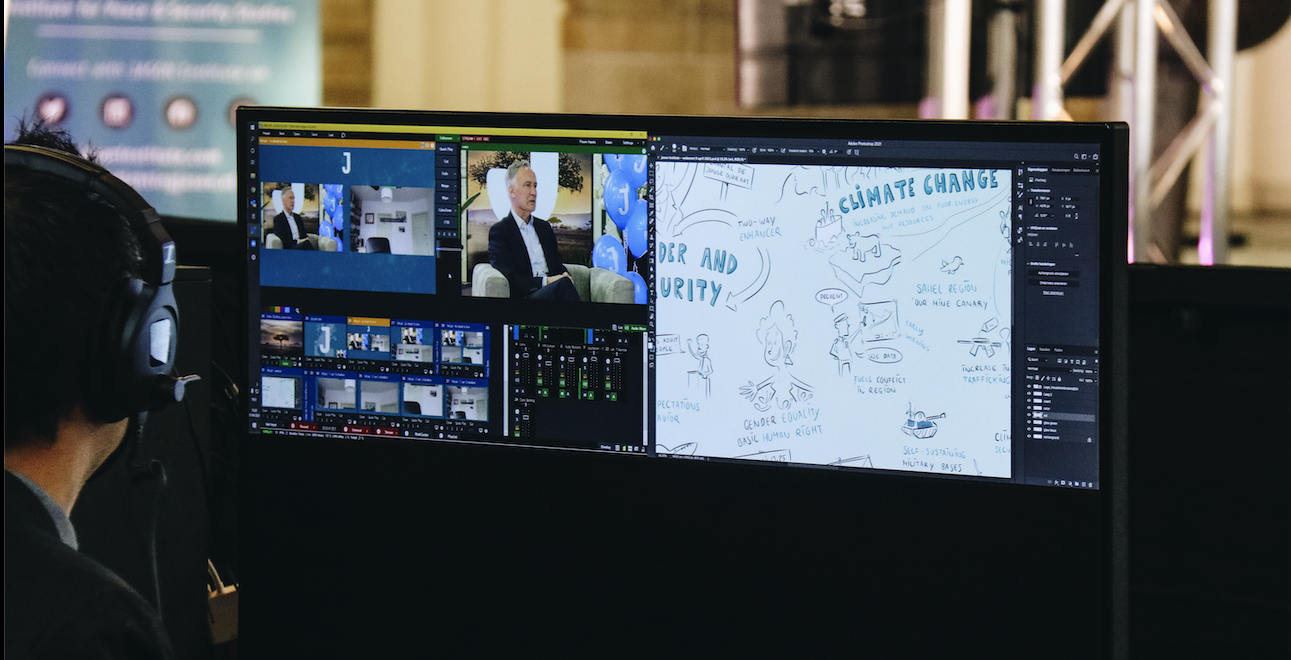
For smaller events, a compact setup is often sufficient: a good sound system, a clear display and reliable connection solutions for online participants. For medium-sized conferences of 100 to 500 people, elements such as distributed sound installations, multiple presentation areas and possibly simultaneous interpretation are added. For major events or multi-day conferences, a fully staffed AV team on location is essential, including a director who is responsible for technical direction.
A key focus for any format is scalability. Preferably choose an AV partner who can professionally carry out both small and large events, so you don't have to hire a new supplier every edition of an event.
What can go wrong without professional AV support?
Organizers who opt for non-professional or insufficient AV support run several risks. The most common problems are sound problems such as feedback, too soft or uneven sound in the room, and microphones that fail. These types of failures can almost always be prevented with a proper sound check and the use of quality equipment.
Projection and display issues occur when image quality doesn't match the location. Think of a projector that is too weak in a bright room, a resolution that does not match the presentation materials, or a screen that is too small for the room size.
Connection issues at hybrid events are a third common bottleneck. When online participants are unable to hear the speaker properly or the image freezes, the hybrid component of the event quickly becomes a burden instead of an added value.
Finally, there are planning and logistical problems. AV-building takes time, more than most organisers think. When set-up time is tight or there is no technical support during the event itself, there is a high risk of problems.
Practical experience: how technology and content go hand in hand
In more than sixty years of experience in audiovisual event support, we see the same pattern over and over again: the events that go best are those where the AV partner is involved early in the planning process.
A technical kick-off, a discussion about the location, the program setup, the expected audience and the specific wishes make it possible to make the right choices in advance. Examples include the positioning of screens so that each participant sees visibly, the choice for wireless or wired sound based on the walking space, and whether registration or live streaming is desirable.
During the event itself, an experienced AV technician is irreplaceable. Not only to respond to technical problems, but also to make proactive adjustments: adjust the sound level to the filling of the room, control slides when speakers want, or monitor the connection with online participants.
What do you pay attention to when choosing an AV partner for your event?
There are a number of criteria that distinguish a good AV partner from an average one. Experience with similar events is a first indicator. A partner who mainly hosts weddings has different expertise than someone who specializes in conferences or international conferences.
Own equipment versus rent is a second consideration. Partners with their own, well-maintained equipment have more control over quality and availability than parties that are completely dependent on external rentals.
Technical knowledge and communication also determine the quality of the cooperation. A good AV partner translates technical options into understandable choices for the client. You don't need to be a specialist, but you want to understand what you're getting.
Complete care is the last criterion. If, in addition to AV, simultaneous interpretation, content registration or live streaming is also required, it is more efficient to work with one partner that integrates all these disciplines. This reduces the coordination burden for the organizer and reduces the risk of coordination errors.
Conclusion
Audio-visual support at an event is a field of expertise that directly influences the outcome of your event. From the first sound check to the last slide, technique that works is technology you won't notice. And that is exactly the goal. By involving an experienced AV partner early and opting for quality equipment and expert technical guidance, you lay the foundation for an event that looks professional and is long remembered.